Shining a Light on an Overlooked Complication: Suzannah Michell’s Research
Arrow Stories Latest News

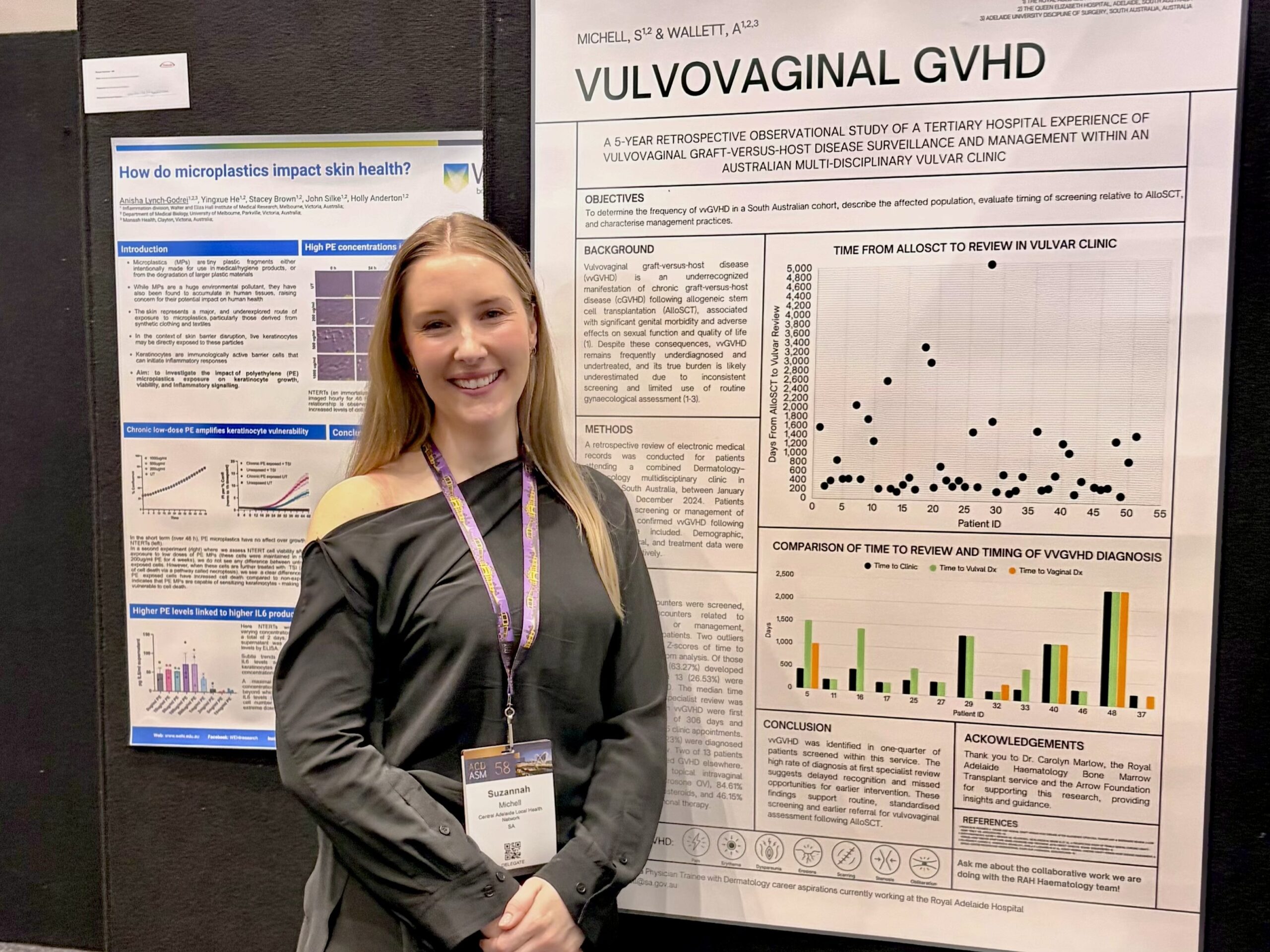
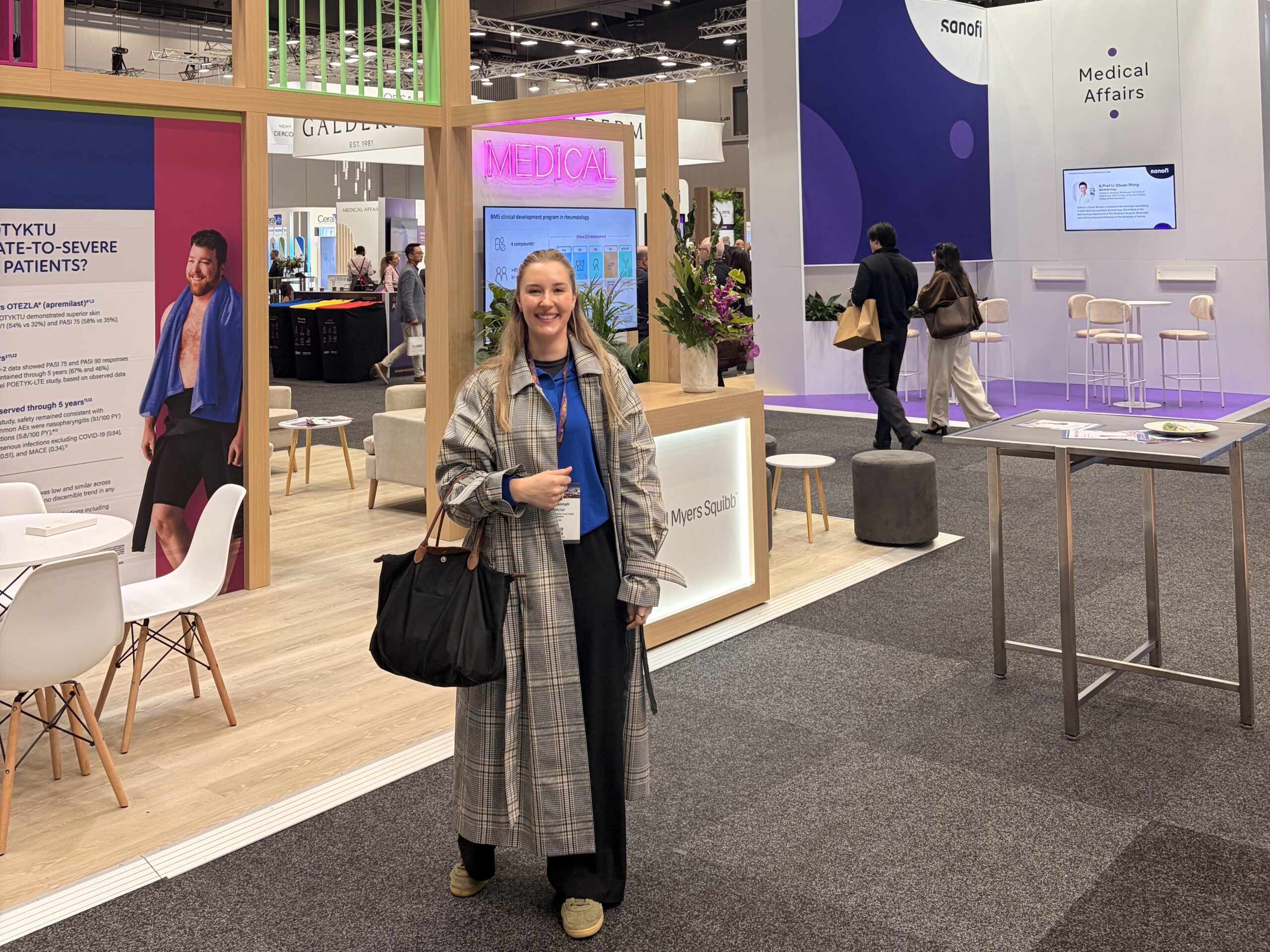
Suzannah Michell, a Physician Trainee at the Royal Adelaide Hospital, is helping bring much-needed attention to an often-overlooked complication of stem cell transplantation—vulvovaginal graft-versus-host disease (vvGVHD). With support from an Arrow Foundation Travel Scholarship, Suzannah recently presented her research at the Australasian College of Dermatologists’ Annual Scientific Meeting, sharing insights that could significantly improve the care and quality of life of transplant survivors.
Suzannah was inspired to apply for the scholarship as a way to elevate the work she had been undertaking alongside the Haematology and Dermatology units at the Royal Adelaide Hospital. Her research focuses on improving awareness, understanding and management of vvGVHD, a condition that can have a profound impact on patients but remains under-recognised in clinical practice. “I feel proud to be contributing to this area of research in the hopes of improving outcomes for women undergoing stem cell transplants” she says.
When Suzannah learned she had been awarded the scholarship, she was “thrilled.” Like many early-career clinicians, the cost of travelling to present research can be a significant barrier. “As a junior doctor, the financial toll of training and presenting research can be really challenging,” she says. “The support from the Arrow Foundation was a huge load off my shoulders.” Beyond the financial relief, the scholarship also provided an important sense of validation. “It came at a time when I was juggling full-time study, part-time work and full-time research. It gave me confidence that the work I was doing mattered.”
Presenting at the conference was a milestone moment. While Suzannah admits she was nervous, the experience ultimately strengthened her confidence as a clinician and researcher. “It was really reassuring to see the positive response—it showed me that I do know this topic well and that it’s an important area to keep pursuing.”
Her research highlights significant gaps in screening and diagnosis of vvGVHD, including delayed identification and limited clinical awareness. These gaps can mean that patients go untreated for extended periods, impacting their long-term wellbeing. Through presenting her work, Suzannah hopes to encourage earlier detection, improve referral pathways, and strengthen collaboration between specialties.
One of the key takeaways from the conference came during the medical dermatology sessions, which explored the relationship between systemic disease and the skin. “It really reinforced how interconnected these conditions are,” she says, and how vital it is to take a multidisciplinary approach to care.
Importantly, Suzannah’s work is already influencing clinical practice. She notes that she will be more proactive in referring bone marrow transplant recipients to gynaecology, helping ensure that potential complications like vvGVHD are not missed. Conversations at the conference also highlighted how easily the condition can go unrecognised, with some clinicians realising they had likely not been identifying cases in their own practice.
Looking ahead, Suzannah hopes to publish her study and present her findings more broadly within her hospital, continuing to build awareness and drive change. The experience has also opened the door to new connections and potential collaborations, further strengthening the impact of her work.
For Suzannah, the scholarship was more than just financial support—it was a pivotal moment in her career. “It was a highlight to present my research and connect with others in the field,” she reflects. “It’s helped me keep moving forward.”
She is also quick to acknowledge the role of donors in making this opportunity possible. “Thank you for believing in this research,” she says. “The support took away a lot of stress, but just as importantly, it gave me a sense of encouragement and direction at a time when I really needed it.”
Through her dedication and advocacy, Suzannah is helping to ensure that an under-recognised condition receives the attention it deserves—ultimately improving care and outcomes for stem cell transplant patients now and into the future.