Sam Sheehan and Aplastic Anaemia
Latest News Patient Stories

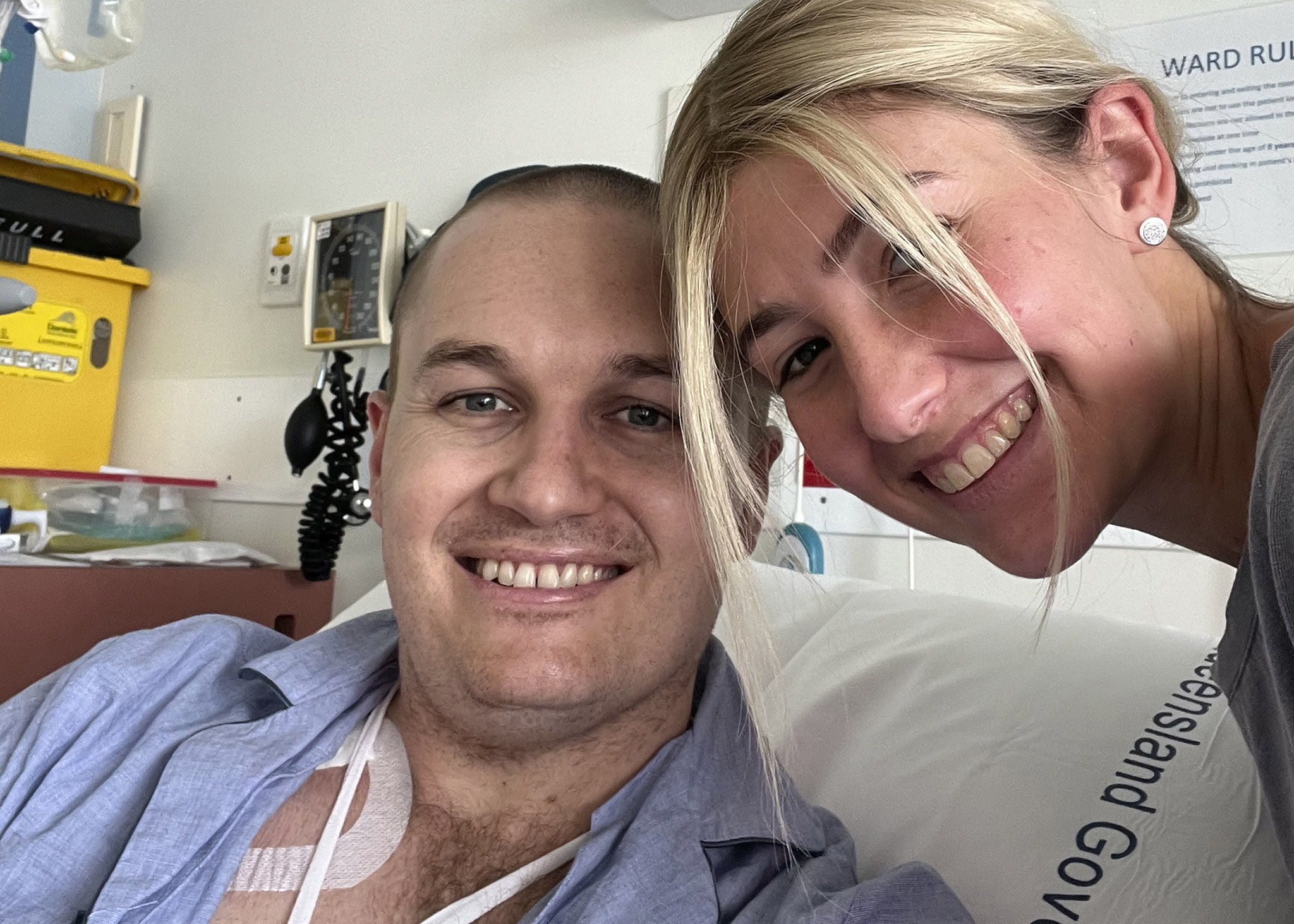
Meet Sam Sheehan, an Aussie living and working in Vietnam with his partner. Sam, with his ever-positive outlook on life, put a lot of his seemingly innocent health woes down to travel bugs and a difference in health care systems, but as one symptom lead to another, Sam started to come to the realization that there was something more sinister at play.
Aplastic anaemia.
Aplastic anaemia is blood disease, but it’s not blood cancer. Unlike leukaemia where your bone marrow makes too many white cells or the white cells are defective, aplastic anaemia means your bone marrow stops making cells at all: No white cells to fight infection, no red cells to carry oxygen and other nutrients around your body and no platelets to clot.
Here is Sam’s story: from the discovery of his disease through to his rapid treatment culminating in a bone marrow transplant back home in Australia with a donation from his brother.
It’s a long story, a quick story and a wild story all at once.
Hang on for the ride.
Sam Sheehan:
I had moved to Vietnam, and was there with my partner Hannah. We were living and working there, and everything was going just fine. We’re young, fit, healthy, active, living a normal life. I’d been having a little bit of an issue with my wisdom teeth, and I was booked in with a dentist to check that out, but only after we got back from Thailand where we were headed for a family wedding.
So, off we go to Thailand, and while we were there I booked in for a nice relaxing massage. Not a sports massage or physio treatment, or anything like that. Just a nice gentle massage with the emphasis on relaxation. And I bruised.
I thought that was a bit bizarre but didn’t really make anything much of it. I was feeling a bit tired and lethargic, but I just put that down to maybe having had too much to drink one night, or maybe fighting off a bit of a travel bug or something like that. And then I developed a headache. It wasn’t dreadful, but it lingered, and I was getting a bit dizzy when I stood up. And again, I just thought maybe I’d picked up a cold or flu or something. You know what it’s like when you travel: you’re always exposed to all sorts of things like that.
Then I burst a blood vessel in one eye, and it just wouldn’t clear up. It got worse and worse until about half my eye had turned a deep red.
But I was feeling pretty OK. Just a bit more tired than usual, and I just put it down to fighting off a virus or something. And then my lips started splitting and bleeding, and my only thought was that I needed to start using Chapstick more often.
When we got back to Vietnam, I went to that dental appointment. They wanted to do a good dental checkup and clean as part of the preparation for dealing with my wisdom teeth.
During the clean the dentist asked, “Do your gums usually bleed when you have a clean?” And yeah, they do sometimes, just a little bit, but this time they were still bleeding about 6 or 7 hours after the treatment.
“Wow, they do a thorough clean here in Vietnam!” was all I thought of it.
The dentist had clearly started to wonder whether I might have had some kind of issue with clotting, and ran some blood tests just to be sure before they performed any procedures on my wisdom teeth. They took some blood samples, and put on a little Band-Aid at the site of the needle. Later that day I had a shower and took that Band-Aid off, and blood trickled down my arm. Not gushing or anything like that. Still I just thought, “That’s odd. Oh well, I guess I need another Band-Aid.”
So that was Wednesday. That night I took a photo of my eye, which was still red, and sent it to a medically trained friend of the family back in Australia. His response was “keep an eye on it and go to the doctor if it gets worse”.
So I didn’t worry about it. The next day, Thursday, I went into the office as usual. I was feeling a bit off by then, but still OK. I was ready to start a day’s work like I always did.
A little later that day I got a phone call from the dentist’s office to say that they thought I should probably go to the doctor straight away. They’d got my blood results, and they were so concerned by them that they ran the tests another three times just to double check, and they’d got the same result each time.
And I’m just thinking, “Yeah, yeah. You’ve probably just got some dodgy testing equipment back there.” So, I asked them to send the results to me so I could take a look and send them to that medically qualified friend of the family, which I did.
He called me straight away and said, “Mate. Those numbers don’t look good. You’re sick. It’s either leukaemia or aplastic anaemia.” I was like, well, I hope it’s aplastic anaemia, because leukaemia’s cancer, right? Anaemia just means my iron’s a bit low. I can just start eating a bit more red meat and I’ll be fine.
And he was like, “No mate. Aplastic anaemia’s a really rare and really serious disease. You don’t want it to be that. You need to come home to Australia as soon as you can, but you’re in no condition to fly right now. Is Hannah there? Go get her to listen in on the rest of this conversation so she can take notes of everything I’m about to tell you.”
He convinced us that I probably should take myself off to the hospital, but there was no way I was going in an ambulance. I was fine! Just a bit more tired than usual because I was anaemic. We’re in Vietnam. Things like that happen here. It’s all a big mix up, and now everyone’s carrying on like a pork chop! So, I picked up my phone and my laptop and we jumped in a Grab (the equivalent of an Uber) and headed off to the international (expat) hospital.
They took another lot of blood for testing, and I was convinced I’d be back in the office that afternoon. At the most I’d need an iron infusion or something and I’d be right as rain.
But no. This lot of blood tests showed even lower counts than the last, and I needed blood transfusions straight away. The only thing is, the health system in Vietnam is completely different to here, and the international hospital we were at didn’t have any blood products. They said I’d need to go to the local hospital to get the transfusions.
So off we went to the local hospital, and I have to say it was the scariest part of this whole aplastic anaemia saga. We hadn’t been in Vietnam very long, and although we’d been having weekly Vietnamese language lessons, our language skills weren’t up to dealing with complex medical issues. So there was a huge language barrier. And I was put into a ward which was probably a haematology ward, but wow – it was like no hospital I’d ever experienced before.
In Vietnam, the nursing staff only administer medication. They don’t do any of the general care stuff, so every patient in the ward had a carer with them to do everything else: feeding, changing clothes, toileting, and all that stuff. There was no shower, and one bathroom for about 50 patients. There was faeces on the floor, no air conditioning and we were in a humid 35 degrees Celsius. I was never seen by a doctor, and everyone around me was sick and coughing. It was frightening. I was now starting to wonder whether I would survive such a place, if my blood tests were an accurate reflection of my immune system.
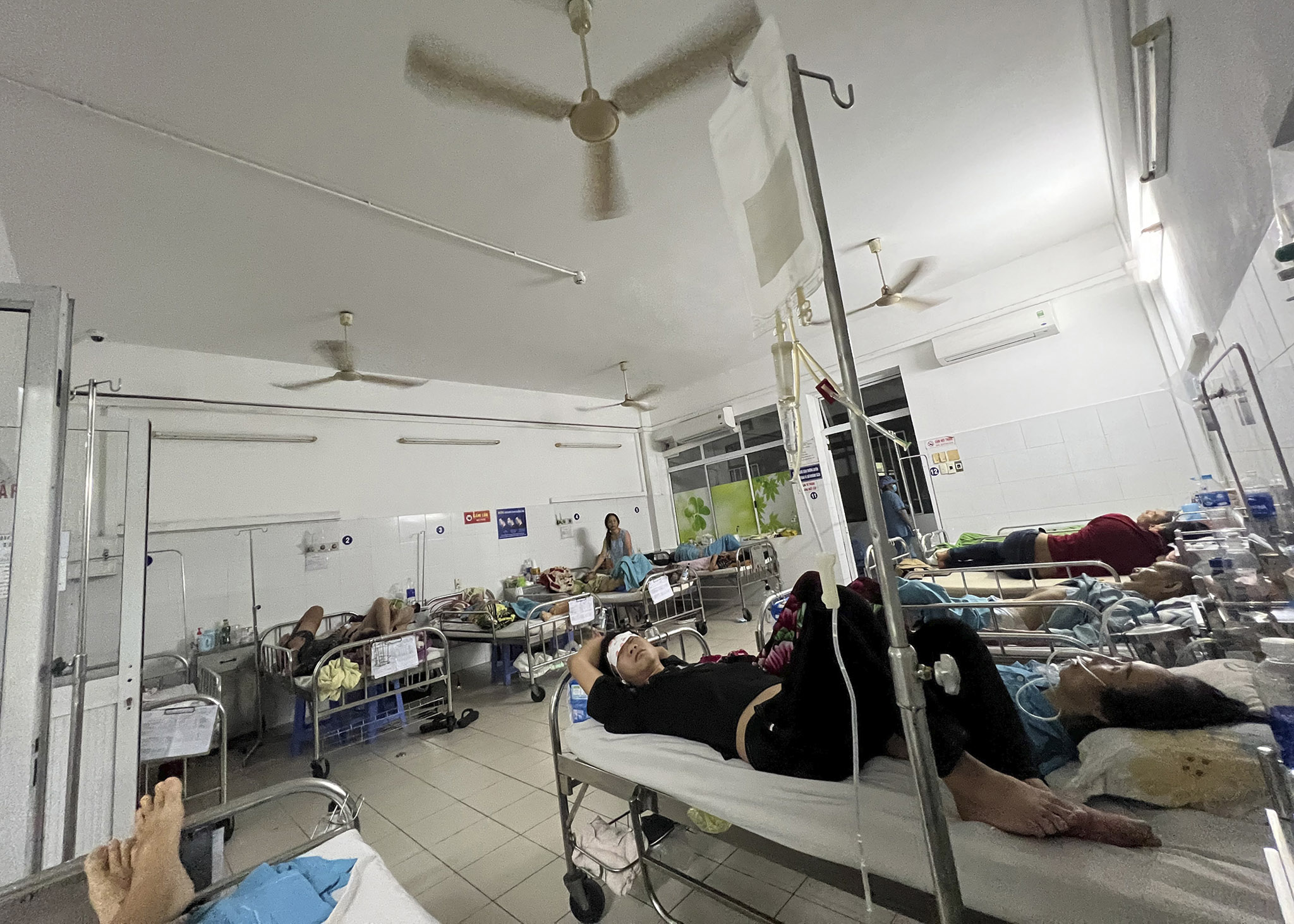
By this time, our medical friend in Australia had enlisted the help of a haematologist he knew. We rang him and explained the situation, and he said to go back to the first hospital immediately and that he would arrange blood products to be made available. I don’t know how he did it, but somehow he managed to get that sorted. I spent 6 or 7 days in ICU before I was well enough to fly back to Australia. And for that to happen, I had to fly a paramedic and a nurse from Australia to Vietnam to accompany me on the plane home.
It all came on so quickly. I went to work as usual one Thursday morning, popped out for what I had assumed would be a quick bit of extra testing, and I never went back to the office or my apartment again.
I had done a full health check in May 2023, before moving to Vietnam and I was perfectly fine. No sign of any illness at all. The first vague kind of symptoms began in mid-October, and just two weeks later I was in the Mater Hospital in Brisbane having a bone marrow biopsy.
That biopsy led to a formal diagnosis of severe aplastic anaemia. I heard that and thought, “Yeah right. Now you’re just whacking adjectives in front of the diagnosis to make it sound more serious.” More tests, and it changed to very severe aplastic anaemia. “Right. You’re all just trying to be funny now with your adjectives!” And then the haematologist explained to me that it was actually very serious, with less than 5% of my bone marrow functioning properly. “The worst I’ve ever seen,” was what he said.
“Geez mate. Maybe don’t get into motivational speaking if this doctor thing doesn’t work out for you!”
By this stage I had an infection that took 12 days to get on top of. I was talking with my doctors every day, and slowly starting to realise just how serious this all was and what was ahead of us.
And then it all began in earnest: intravenous antibiotics, blood transfusions… I was in such a state that they decided they needed to rush through a bone marrow transplant. First step was to find a bone marrow donor. Luckily one of my brothers was a match. And luckily I get on with all my siblings. Ha! Imagine that conversation if you’d had a falling out with your brothers: “I know we haven’t spoken for the last 10 years, but can I have some of your bone marrow?”
I was taken from the Mater to The Royal (Brisbane) and started on chemo in preparation for a bone marrow transplant. I had 7-8 days of chemo. It was short and sweet, but geez, it was something else!
There’s this fog. This brain fog and incredibly painful headaches. I spent a lot of time lying in the dark with a washer over my face. My whole body ached pretty much all the time.
And by this stage, we’d had those conversations that you have to have about enduring guardianship and power of attorney and all that stuff. Then you get really sick, and you feel sick. You feel deathly ill.
I’m not sure whether you’ve picked up on it or not, but I’m what I’d call ‘naively positive’, but during that chemo I really took a hit, and started thinking that this actually might not be OK.
Then came the bone marrow transplant itself. My brother had bone marrow harvested from his hip in the morning, and it went off for whatever processing they need to do with it, and it was transfused into me at 2 o’clock that afternoon. It was a really quick process.
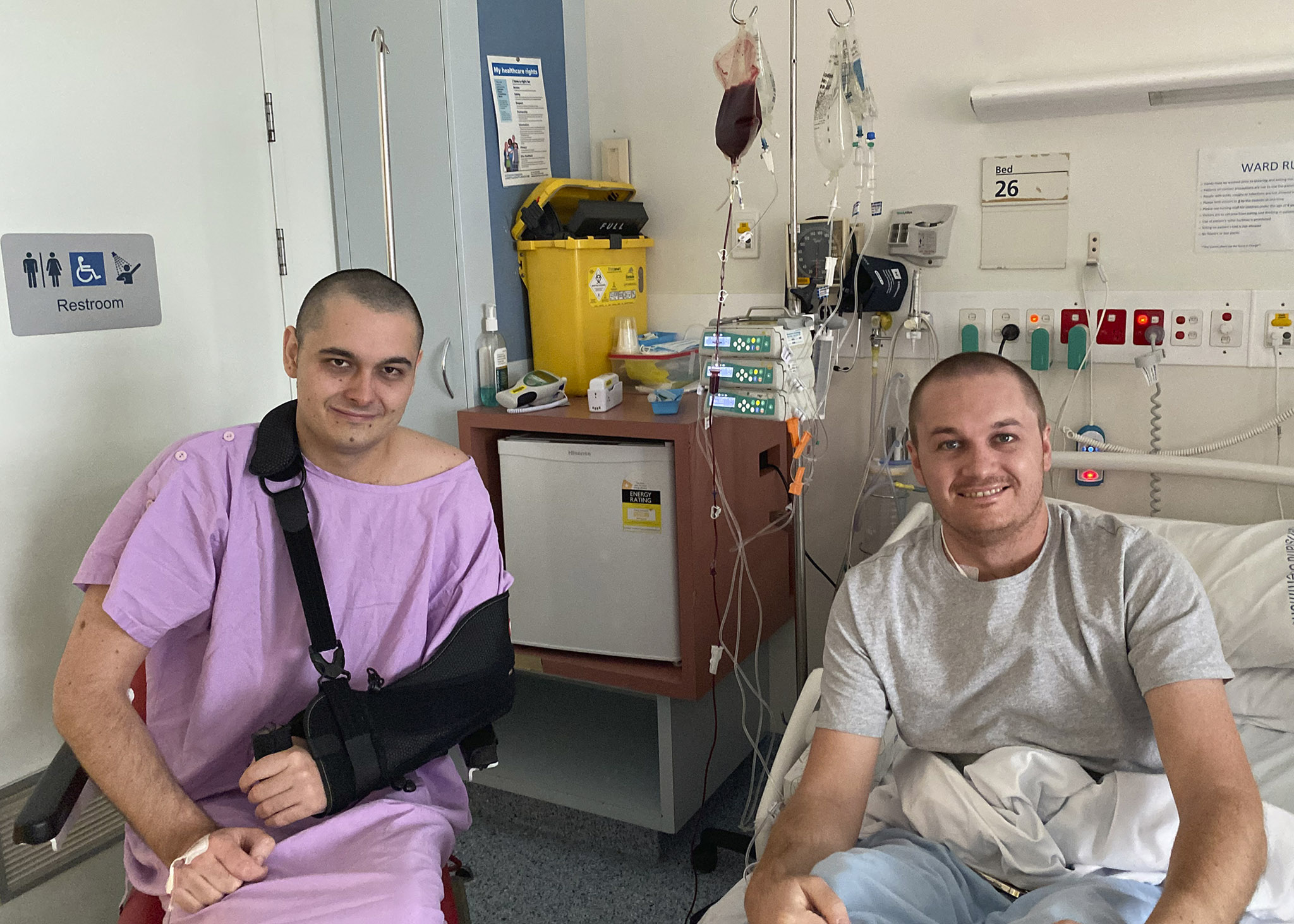
And then came about 2 weeks that I have little recollection of at all. I was in ICU for most of it, and my parents and partner were told to prepare themselves for the fact that I might not make it.
They estimated a 3-5 week hospital stay, but it ended up being 67 days. I got fever after fever, one infection after another. Bacterial infections and fungal infections that were really hard to beat. I hadn’t been outside a hospital for 2 months, and it took a huge toll on my mental health. I begged my team to let me go home and they eventually agreed to day passes.
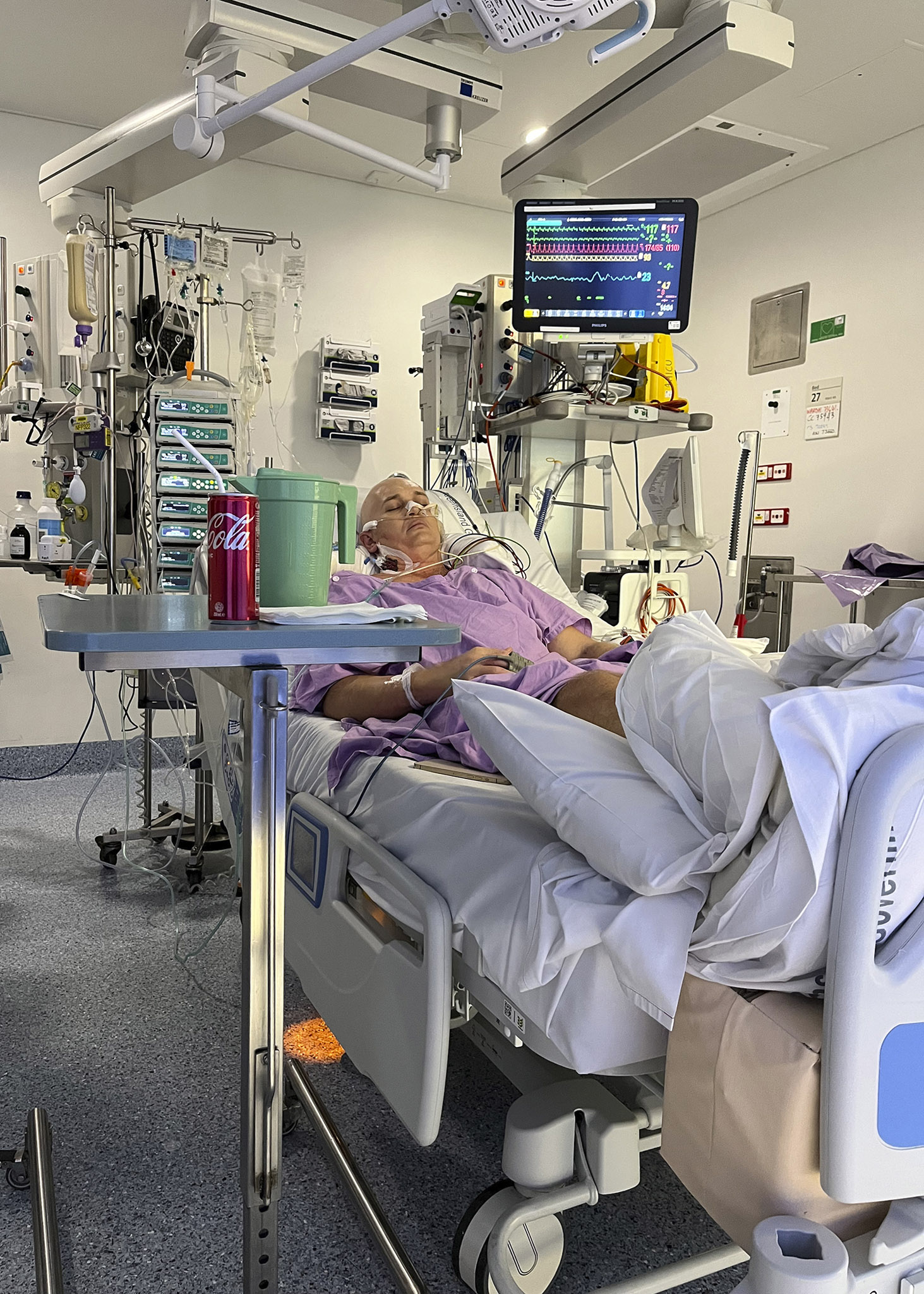
I’d go home for 5 hours during the day, and then be back in hospital overnight. The silly thing was, I didn’t do anything different at home to what I would have been doing in the hospital. I was just lying around in a different room, but it made all the difference in the world.
Eventually I was allowed to go home. I was still not really well, and had a nasty lung infection that needed daily antibiotic treatment, but my team could see that being home was helping my recovery, so we organised for a nurse to come and teach Hannah and me how to administer the antibiotics through my PIC line. Once we got the hang of that, the hospital would give us a week’s supply of the meds and we’d administer them ourselves.
So, that is where I am at now. 120 days out from transplant and back home. I’d love to say I’m stronger or something like that, but I don’t know if I am. Maybe I will be one day? I’m still the happy-go-lucky guy I’ve always been, but honestly? I’m exhausted, physically, mentally, and emotionally.
There’s still a lot of healing to do. I have to remind myself, I am only 120 days out from transplant.
I guess I’m a very lucky guy in an unlucky situation. There are a lot of people who have had it worse than me. I’m so grateful to be alive! I’m lucky that I have Hannah with me, and I’m grateful for my family.
And one thing I know that has changed is that I’ll probably be more likely to go to a doctor next time I feel unwell!
Approximately 160 Australians are diagnosed each year from bone marrow failure, many of whom are children and young adults. Sometimes patients with non-malignant diseases like these fall through the gaps for support from other organisations. Arrow supports patients like Sam with our financial assistance program, information resources and patient support groups. You can help by making a donation today.