Brett’s story: Every little bit counts
Arrow Stories Latest News Patient Stories

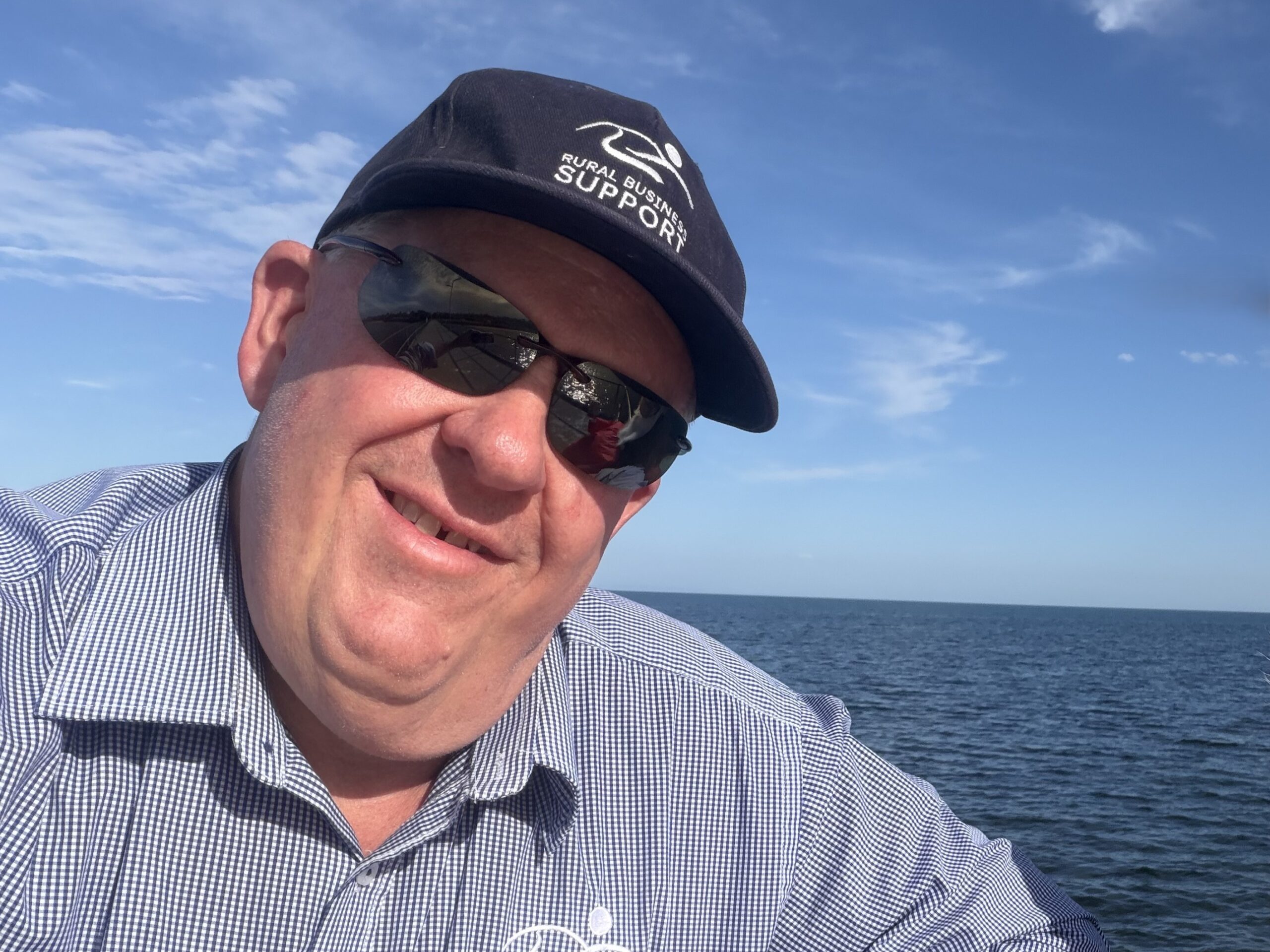
When 58‑year‑old Brett Klau looks back on the end of 2024, it still surprises him how quickly life changed. Just days before Christmas, he was playing competitive volleyball, and around New Years he was out on the jet ski. A slight backache was the only sign that something was wrong — and even then, it came and went and wasn’t holding him up at all.
But by early January, the pain had become so severe that Brett struggled to get in and out of bed, and even sneezing or coughing came with a shot of sharp pain through his lower abdomen. On 7 January, he visited his GP in Port Lincoln. A lumbar CT scan was ordered, and within two days he was speaking to a specialist in Adelaide over Zoom. The specialist scheduled him for a bone marrow biopsy five days later in Adelaide, and 650 kilometres from home.
Brett travelled to the appointment, but by this time his pain and mobility were so poor that returning to Port Lincoln, whether by a seven hour drive or a commercial flight, was no longer safe or possible. He was admitted to hospital on 15 January, just eight days after his first GP visit.
The diagnosis came swiftly and was far from anything he had expected: multiple myeloma, a blood cancer that had already caused bulging and fractured discs in his lower spine. “I’d never even heard of myeloma,” Brett says. “It was a real shock. One week I was playing sport, the next week I could barely move and was struggling to get my socks on.”
Facing Treatment Far From Home
For people living in regional South Australia, specialist haematology care isn’t available locally, and after the initial three week hospital stay, Brett soon found himself travelling frequently to Adelaide for chemotherapy, scans, IV treatments, and eventually, preparations for a stem cell transplant.
Across the first half of the year, he spent around two weeks each month in Adelaide receiving treatment. His wife travelled often to support him — at times pushing him in a wheelchair and helping with the practicalities of everyday life, even having to literally pick up after him as he could not reach the floor.
While South Australia’s Patient Assistance Transport Scheme covered many of Brett’s flights and helped with accommodation at SA Cancer Council’s Greenhill Lodge, his wife Jo’s travel often wasn’t covered, and the costs added up quickly: flights, meals, and the extra living expenses that come with living away from home for long stretches of time.
During his appointments at the Royal Adelaide Hospital, Brett was referred to Arrow for financial support. “Most of my treatment costs were covered by Medicare and private health,” Brett says, “but we were out of pocket for Jo’s flights and our living costs. Arrow’s support made a real difference — every little bit counts.”
The Stem Cell Transplant
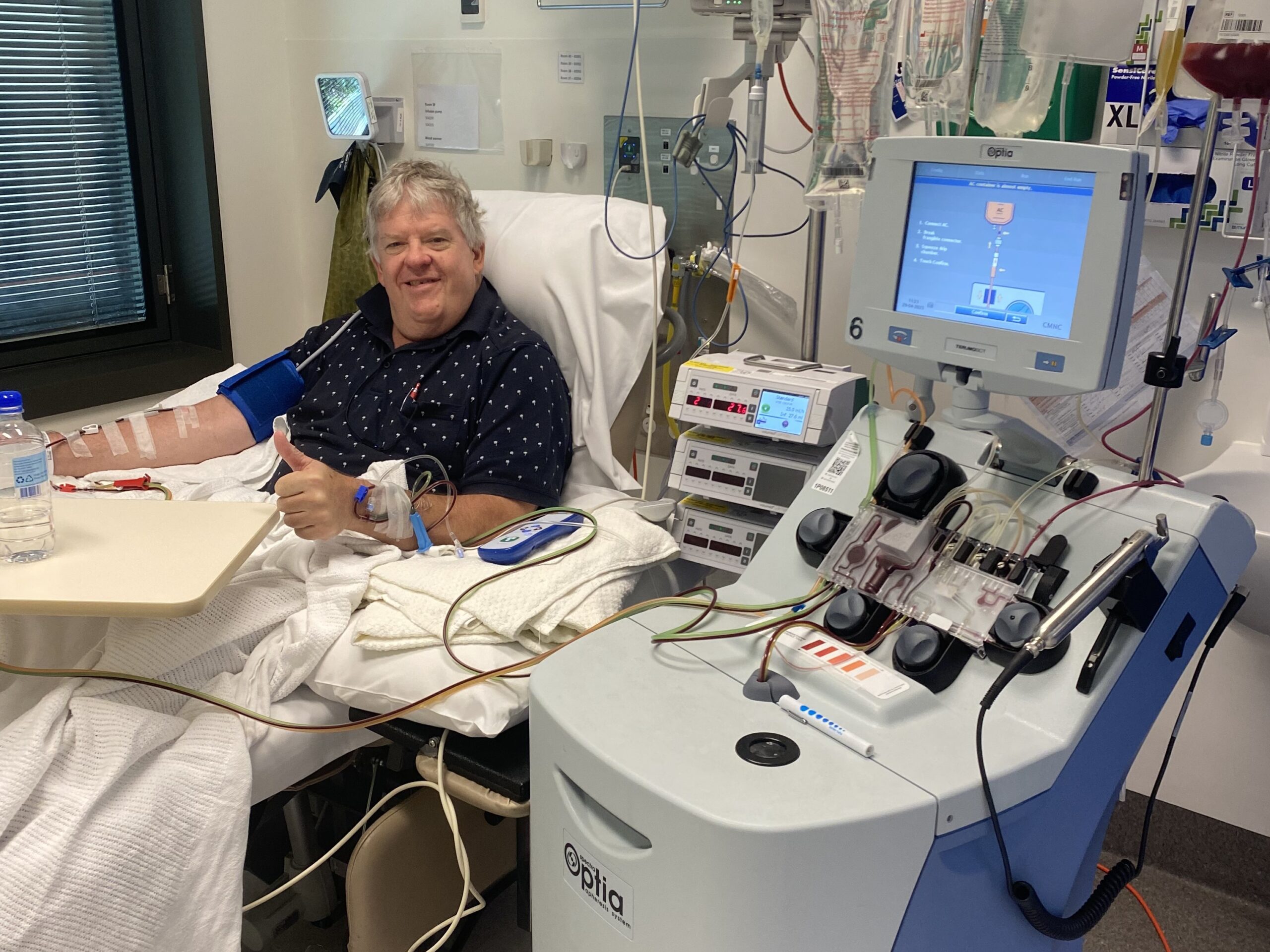 After five days of harvesting spread across late April to mid June, Brett had collected enough stem cells for two future transplants. On 4 July, he received his autologous stem cell transplant — a treatment requiring isolation, constant monitoring, and a mandatory few weeks in hospital while his immune system rebuilt.
Brett considers himself fortunate. Many people experience severe side effects, but his were minimal. He avoided nausea and ulcers, kept eating, and maintained energy. Apart from one brief spike in temperature, his recovery was smooth.
“So many people told me I didn’t look sick — and most of the time, I didn’t feel too bad either,” Brett says. “But I realise now I was a lot more tired than I thought. You just get through it.”
In early August — on his birthday — he received the news he was waiting for: he was well enough to go home. Exactly four weeks after his transplant, he headed back to Port Lincoln.
Rebuilding Life
By September, Brett had returned to work part‑time, building back up from 20 hours a week. Soon after, he resumed full‑time work with Rural Business Support, where he assists South Australian farmers and landowners navigating resource‑sector requests to access their land — a role he’s passionate about.
His agility and strength are still returning, but the pain is gone, and he’s off all pain medications. He now only takes maintenance medications and continues monthly blood tests followed by specialist check‑ins. While his paraprotein levels aren’t yet zero — the level needed to be considered in full remission — they’ve remained low and stable at one or two since mid‑2025. At diagnosis in January 2025, that number was thirty‑nine.
“I’m very lucky,” Brett says. “My treatment’s been quite successful, and I’ve bounced back quicker than most. I know it’s a lifelong condition and that I might need that second transplant one day, but for now, life is pretty much back to normal.”
Gratitude and Perspective
Brett openly acknowledges not everyone has such a straightforward path. In his words: “I’ve always been a glass‑half‑full person. I know I’m fortunate — not just with how the treatment went, but with the support around me. My wife, my two adult children, my workplace, and charity organisations including Arrow… they all helped us get through a really tough year.”
For families living hundreds of kilometres from Adelaide, the costs and logistics of cancer treatment can be overwhelming. Brett’s story is a powerful reminder that financial support isn’t just about the dollars — it eases stress, keeps families together, and helps people focus on healing.
“We are so thankful for Arrow’s support,” Brett says. “It really does make a difference.”