Helping people thrive after bone marrow transplant
Healthcare Provider stories Latest News

Is it possible to thrive after a bone marrow transplant, not merely survive?
When you’re having a bone marrow transplant, it can feel as if your whole world stops. Everything else is put on hold while you hunker down and focus on getting through your treatment. And rightly so! What not many people stop to think about, though, is what goes on behind-the-scenes to make this whole amazing process work. It needs to work for the individual patient, and it also needs to keep improving patient after patient, year after year.
It’s at this point in the story that most people start thinking about medical researchers in white coats, working in labs, peering down microscopes, but there’s a whole other group of people working hard to improve outcomes for bone marrow transplant patients that you’ve probably never considered: data analysts.
It’s not only scientists in labs that help people thrive after bone marrow transplant. Data analysts play a vital role in improving outcomes for bone marrow transplant patients too, by sifting through decades of data, looking for patterns in the long-term outcomes for thousands of patients. When you gather a few bone marrow transplant patients together and talk with them about their experiences* each person’s story will be a little different. When you look at the stories of thousands of patients gathered over 40 years, though, patterns do begin to emerge.
This kind of analysis is exactly what Alia Cibich, Clinical Data Manager at the Bone Marrow Transplant Unit at Royal Adelaide Hospital, does every day. She maintains a statewide clinical database with over 2,000 patients spanning more than 40 years, and — being the child of a bone marrow transplant recipient herself — has a special interest in the late complications of allogeneic stem cell transplant.
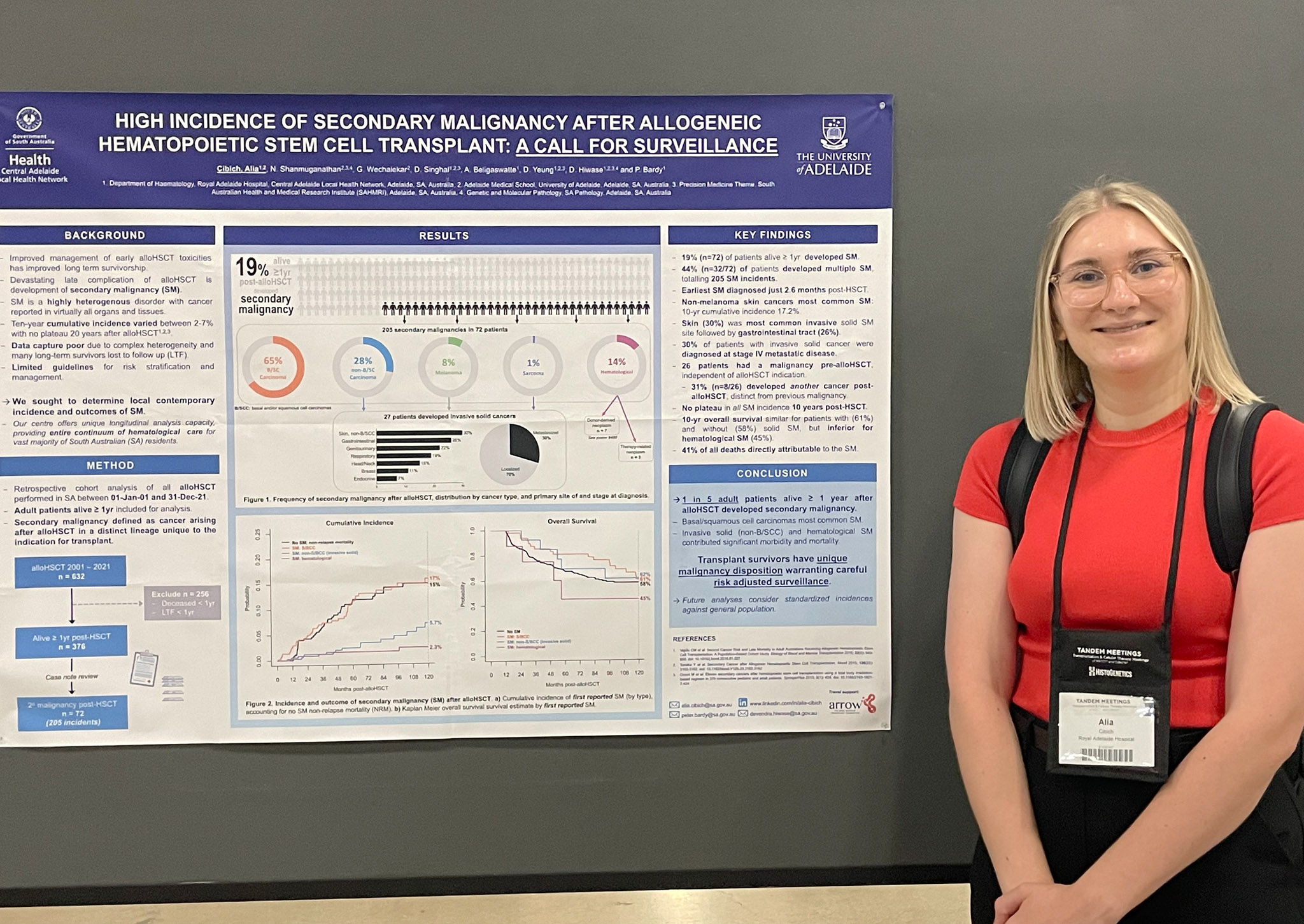
Alia is specifically interested in the development of new cancers after allogeneic bone marrow transplant. She has discovered through her review of the South Australian dataset that 19% of adults who are a year or more post allogeneic stem cell transplant go on to develop a secondary cancer. This finding is limited, however, due to the relatively small population size behind the dataset she was working on. The bigger the dataset, the more powerful the results of analyses like these can be. Global collaboration and data sharing is crucial in order understand the patterns of secondary cancer development after bone marrow transplant.
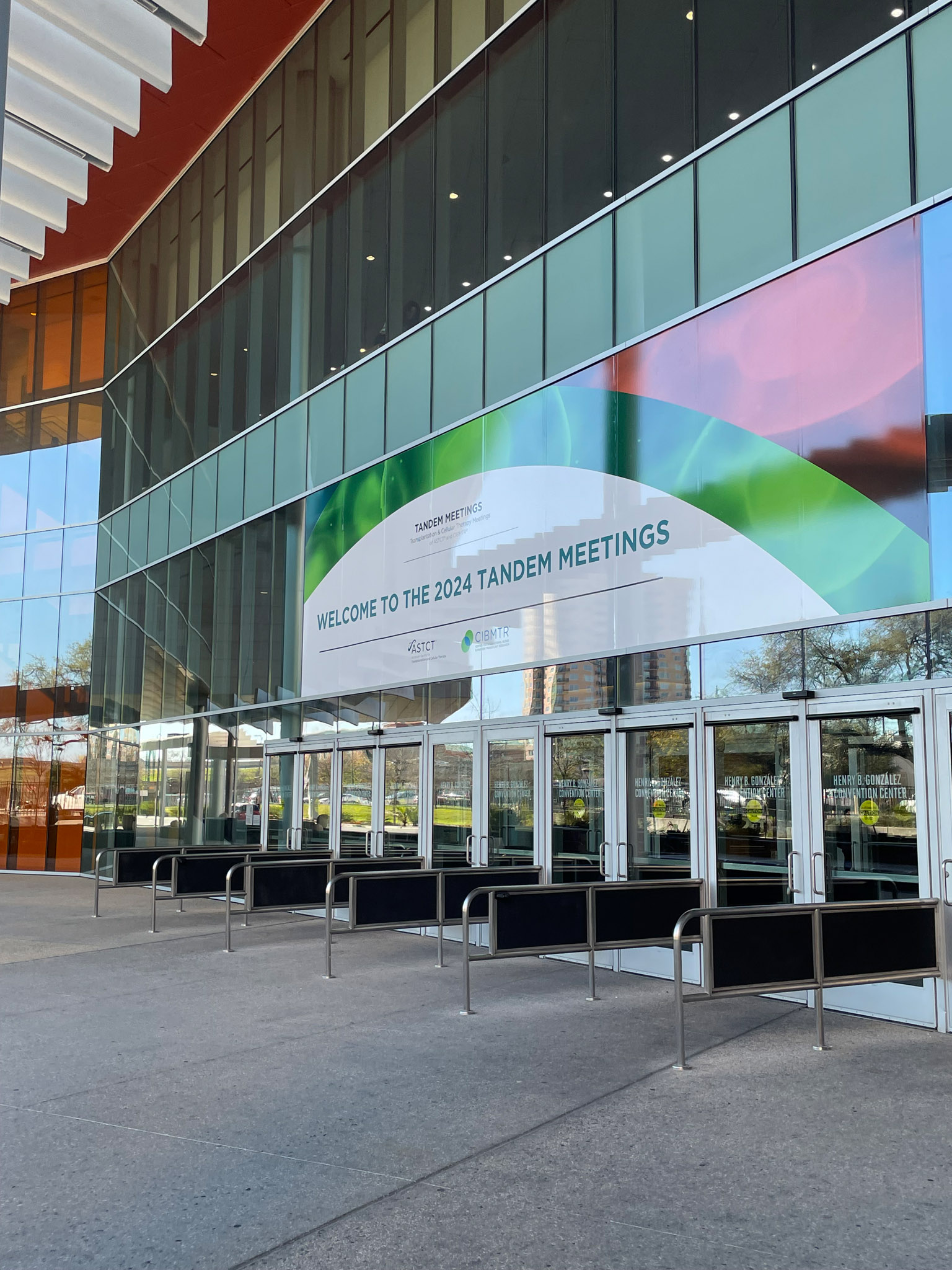
This is where Arrow is able to help. Alia was recently granted the Jazz Pharmaceuticals Award to help her attend the 2024 Tandem Meeting of the American Society of Transplant and Cellular Therapies (ASTCT) and the Centre for International Bone Marrow Transplant Research (CIBMTR) being held in San Antonio, Texas. CIBMTR is an international research collaborative which includes a large network of transplant centres and an extensive clinical outcomes database. Alia had the opportunity to present two posters at the conference about her research on secondary cancers after stem cell transplants, and began forming those pivotal international collaborations she has been seeking to help validate her findings.
International collaborations by sharing datasets might sound like something you could do easily these days — after all, we’re all used to sharing files across the world at lightning speed with the click of a button — but it’s not as simple you would think.
For international collaboration to work, it’s vital for data managers and analysts to have a clear understanding of each other’s work, how data is collected, and how it’s classified in each database. Alia said that her attendance at the conference was “highly productive” and “enabled rich discussion with key stakeholders”. She was able to meet and build relationships with data managers from around the world, making it easier for strong international collaborations to flourish, which will ultimately lead to a better understanding of the long term effects of bone marrow transplants.
We’re looking forward to seeing where these collaborations might lead, and we wish Alia every success with her research, which she is now undertaking as a PhD candidate through the University of Adelaide.
_________________
*We do this regularly through our new monthly patient support group, Transplant Tribe.